Material & Cultural Landmark Analysis
Look beyond the landmark
Visiting Nordic sights is rarely about checking off postcard clichés. The region’s best collections and historic sites tell stories through physical craft: preserved 17th-century oak hulls, bronze castings, modernist brick bond patterns, and polar expedition timber.
Stockholm Sights
Maritime Relics and Palace Architecture
Sweden’s era as a northern superpower left behind extraordinary naval collections and royal urban layouts that reward careful observation.
The Vasa Museum (Vasamuseet)
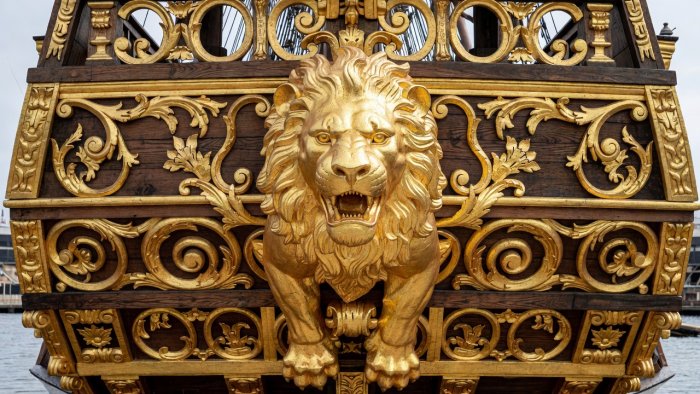
The Vasa sank in Stockholm harbor on its maiden voyage in August 1628 and was salvaged almost entirely intact in 1961. The museum hall is maintained at a steady 18–20°C and 53% humidity to preserve the ancient oak. Look past the awe-inspiring sheer scale of the vessel to examine the lower gun deck replicas, which show how Swedish sailors lived in confined quarters just centimeters from gunpowder stores.
Site Spec
Vasa Visitor Context
- LocationDjurgårdsvägen 49, Djurgården
- Preservation98% original wood structure
- Recommended Time2 to 2.5 hours
- Key DetailStern gallery sculptures & rigging
- TransitTram 7 from Sergels Torg
Historic Quarter
Storkyrkan & The Royal Palace
Stockholm’s cathedral (St. Nikolai) sits adjacent to the colossal baroque Kungliga Slottet in Gamla Stan. Inside Storkyrkan, the towering 15th-century oak-and-elk-horn sculpture of Saint George and the Dragon by Bernt Notke stands as one of northern Europe's most expressive late-medieval carvings.
Modern Art Landmark
Moderna Museet on Skeppsholmen
Designed by Spanish architect Rafael Moneo, the Moderna Museet hosts exceptional 20th-century collections including works by Hilma af Klint, Marcel Duchamp, and Alberto Giacometti, set against the peaceful waters of Skeppsholmen island.
Copenhagen Sights
Architectural Galleries and Royal Bastions
Copenhagen’s cultural spaces blur the boundary between outdoor urban landscape and serene indoor sanctuary.
Ny Carlsberg Glyptotek
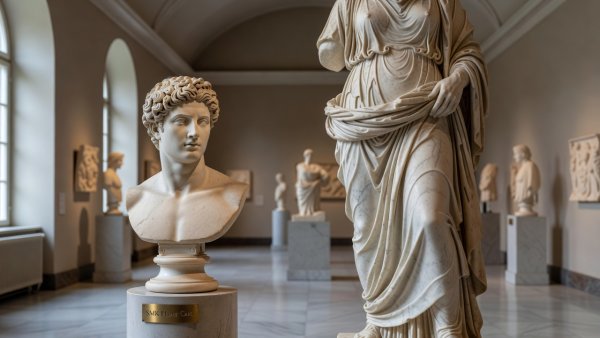
Founded around the personal collection of brewer Carl Jacobsen, the Glyptotek presents an incomparable assemblage of Roman portraits, Etruscan ceramics, and French Impressionist sculpture. The winter garden courtyard—shaded by fan palms and mosaic tiles—provides a restorative microclimate during brisk northern days.
Rundetårn (The Round Tower)
Built in 1642 under King Christian IV as an astronomical observatory, Rundetårn features a continuous 209-meter spiral paved brick ramp instead of stairs. Designed to allow horse-drawn carriages to transport heavy observational equipment to the top, it offers panoramic views over Copenhagen's copper rooftops.
Oslo Sights
Polar Timber, Expressionism & Open Granite
Oslo’s premier attractions are concentrated on the Bygdøy museum peninsula and the vibrant Bjørvika waterfront.
Bygdøy Maritime
Fram Polar Ship Museum
The Fram withstood crushing pack ice on expeditions led by Fridtjof Nansen, Otto Sverdrup, and Roald Amundsen. Visitors can walk the wooden decks and inspect the iron-reinforced hull.
Bjørvika Waterfront
Munch Museum (MUNCH)
Housed in an asymmetric 13-story tower by Estudio Herreros, the museum houses the vast legacy of Edvard Munch, cycling versions of The Scream and Madonna under strict conservation lighting.
Frogner Park
Vigeland Sculpture Installation
More than 200 granite and bronze sculptures by Gustav Vigeland line this open public park, culminating in the 14-meter-high Monolith carved from a single massive granite block.